
Renovate your House in Sicily

Renovating a House in Sicily: What to Expect and Where to Start

You’ve always dreamed of owning your own place in the Sicilian sun. And you’ve found one in the perfect location – congratulations! Whether you’re in the big citythe rolling hills inland or overlooking our crystal-clear sea, buying a property in Sicily is the beginning of an exciting adventure.

There’s just one problem: it’s a bit of a fixer-upper…

renovating house in sicily

How We Make it Easy

At Property in Sicily, our work doesn’t stop when you sign the contract: it’s done when you’ve got the finished home you want. 

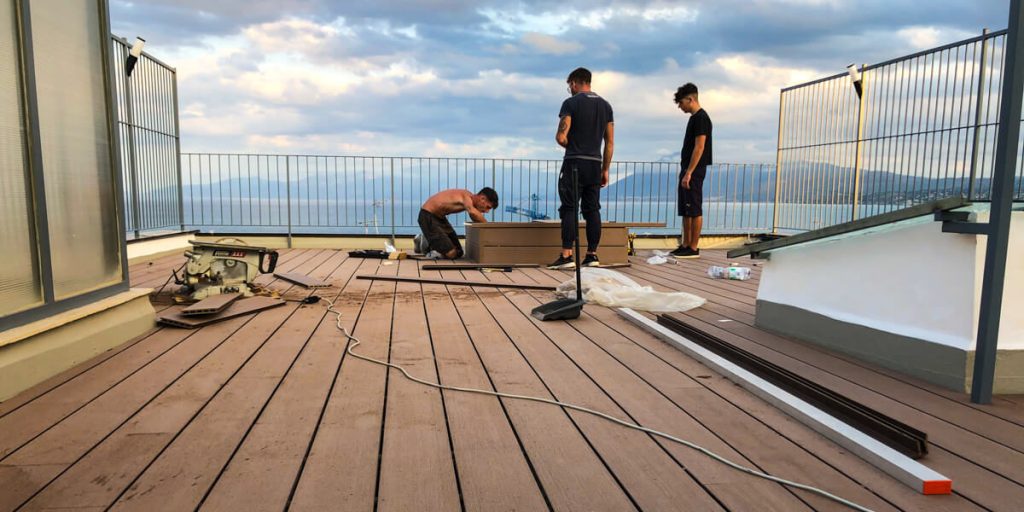
As experienced project managers with a long track record of which we’re very proud, we are available to take as much responsibility as you need for your renovation work. Especially if you’re not confident in Italian or physically in Sicily at the time of the work, it’s hard to overstate how much simpler the process is with a representative you trust. 

Of course, we can’t do it all by ourselves! That’s why we’re always updating our directory of skilled professionals and craftspeople, including lawyers, notaries, accountants, architects, interior designers, insurance agents, builders, carpenters, ironmongers, painters, electricians and plumbers. Many of these do speak some English, but we can also translate and interpret for you whenever it’s necessary. 

The business culture is certainly different down here, and so we are always trying to mediate between cultures in a practical way as well as simply translating. With Property in Sicily in your corner you can rely on realistic scheduling, respect for deadlines and clear communication.

We have a wealth of experience negotiating the red tape that stands between your run-down purchase and your dream home. Our excellent working relationship with the local authorities, particularly in the areas of the Madonie and Nebrodi Parks, can speed up the process by many months.
Three Steps to your Perfectly Renovated Property in Sicily

1 – Making Plans

Once you have bought your property you’ll need, of course, to assemble a team of architects, consultants, craftspeople and suppliers. This is probably the most important set of decisions to get right – as the old saying goes, ‘it’s not what you know, it’s who you know’.

These professionals aren’t just important to make plans, they’ll also be the people who need to file for the relevant permits and request the necessary approvals. What does this mean?

As every property is bound to be subject to some form of restrictions, to renovate or build you will need to:

✔︎ Design your project
✔︎ Submit your plans to the necessary bodies (Cultural Heritage committees, Civil Engineering board, Forestry Commission etc.)
✔︎ Revise your proposal in accordance with the decisions of these bodies
✔︎ Obtain a final clearance

2 – The Local Council

Things, fortunately, get a bit more streamlined here. This next round of submissions are made directly to a single body – the town council or ‘Municipality’.

They will need to check the plans made and the consents you obtained in Step 1. As long as this ground work has been done by competent local professionals and there is nothing to revise, your architect will be able to request planning permission. You should receive it reasonably quickly.

Some particularly progressive local authorities, like those in the Nebrodi Park, have schemes in place to fast-track planning applications made by international investors where the funds are readily available. And the help doesn’t stop there. The villages of San Marco d’Alunzio and San Salvatore di Fitalia offer a no-strings welcome present of €5,000 to anyone who renovates a house in their districts and transfers their residence there. We’re working with other towns and villages in the region to encourage them to adopt their own versions of this amazing scheme – if you’re property-hunting with us you’ll be the first to hear news on that!

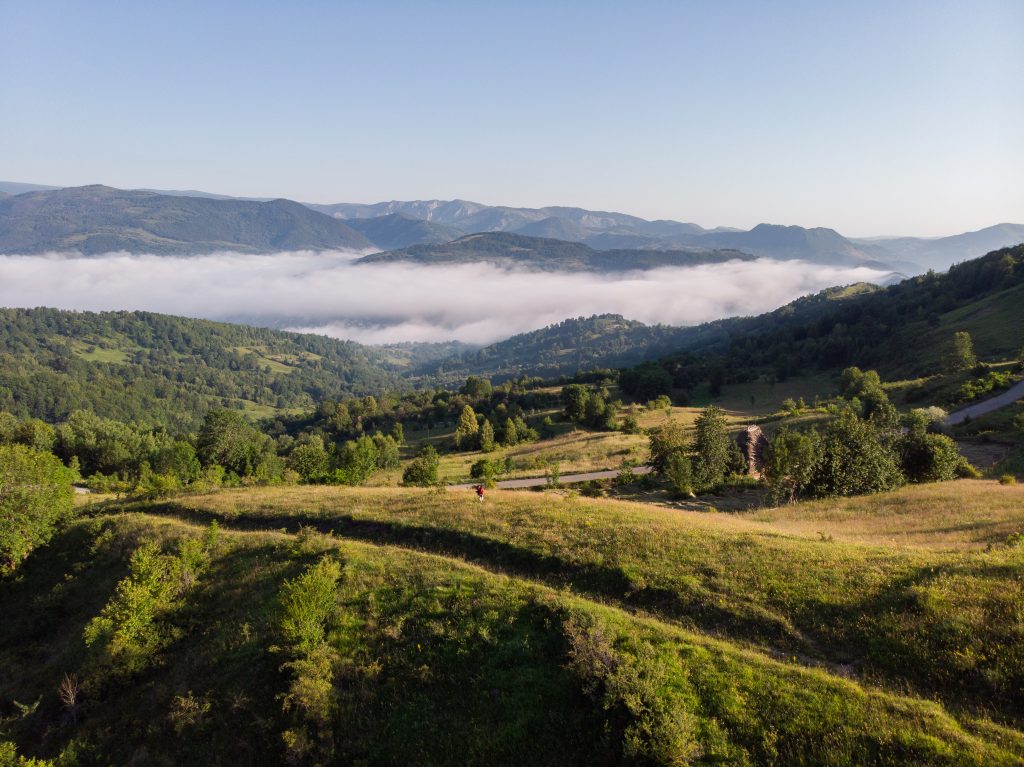
Nebrodi Natural Park

3 – Bricks and Mortar

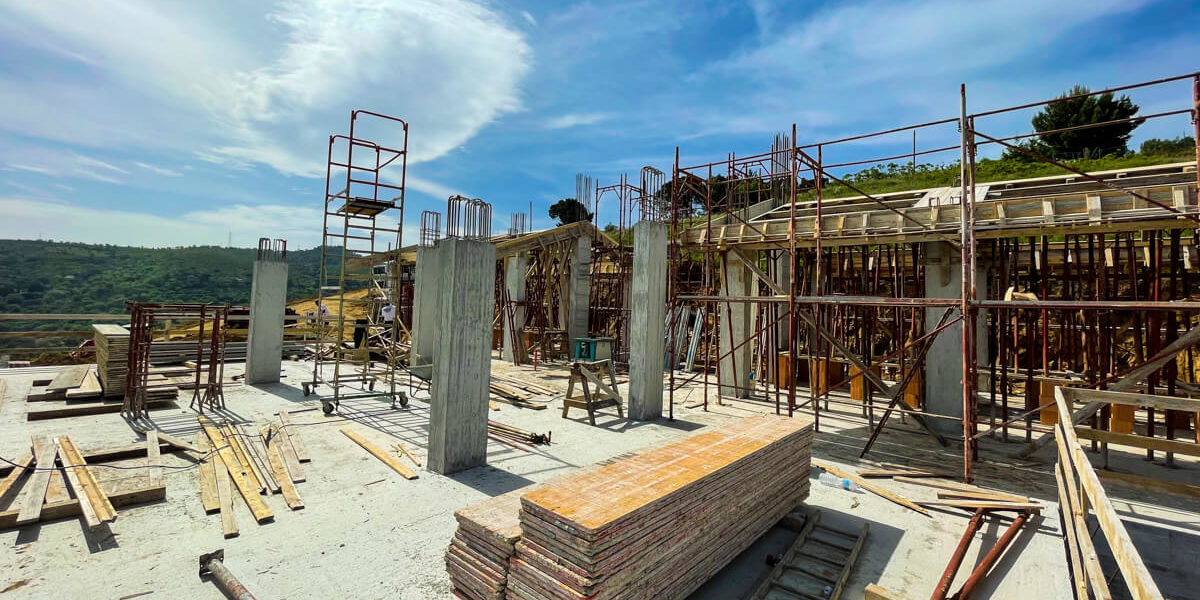
You’re on to the good part – construction! Now you’re hiring a company (or individual tradespeople) to carry out the work – builders, roofers, electricians, plumbers and whoever else you need. Your architect will remain engaged on the project, supervising to ensure that work is carried out in accordance with all your applications, your permits and the relevant laws.

How Long Will it Take?

How long is this all going to take? Obviously, the biggest factor is the amount of work you’re doing, and how many restrictions and covenants the property is under.

What’s the worst-case scenario?

You’ve bought an old house that’s been completely destroyed. It’s protected by a conservation order from the Artistic Heritage authority, it’s in or near a forest and you want to not just rebuild but extend. OK. It sounds like you’re going to have a beautiful finished property, but it’s not going to be an easy journey.

In this case you’ll need all possible agencies to green light your plans. This means that Phase 1 could last, realistically, as much as 12 or even 18 months. In Phase 2 there’s more chance of revisions being needed, and so you might be looking at another 2-3 months. And Phase 3 depends on the size and location of the property, but if your work runs through the winter or the August holidays it might be another 9 months.

…and the best-case scenario?

Some cases can be much simpler. Say you’ve bought an apartment in a town or city (but outside the protected historic centre). You’re not expanding, only renovating. Good news, you’ve dodged all the complicated agencies.

In this case Phase 1 could be completed within a month, Phase 2 should be a swift approval of planning permission received within another month, and Phase 3 could be done within 3 months.

The Bottom Line: Calculating Costs

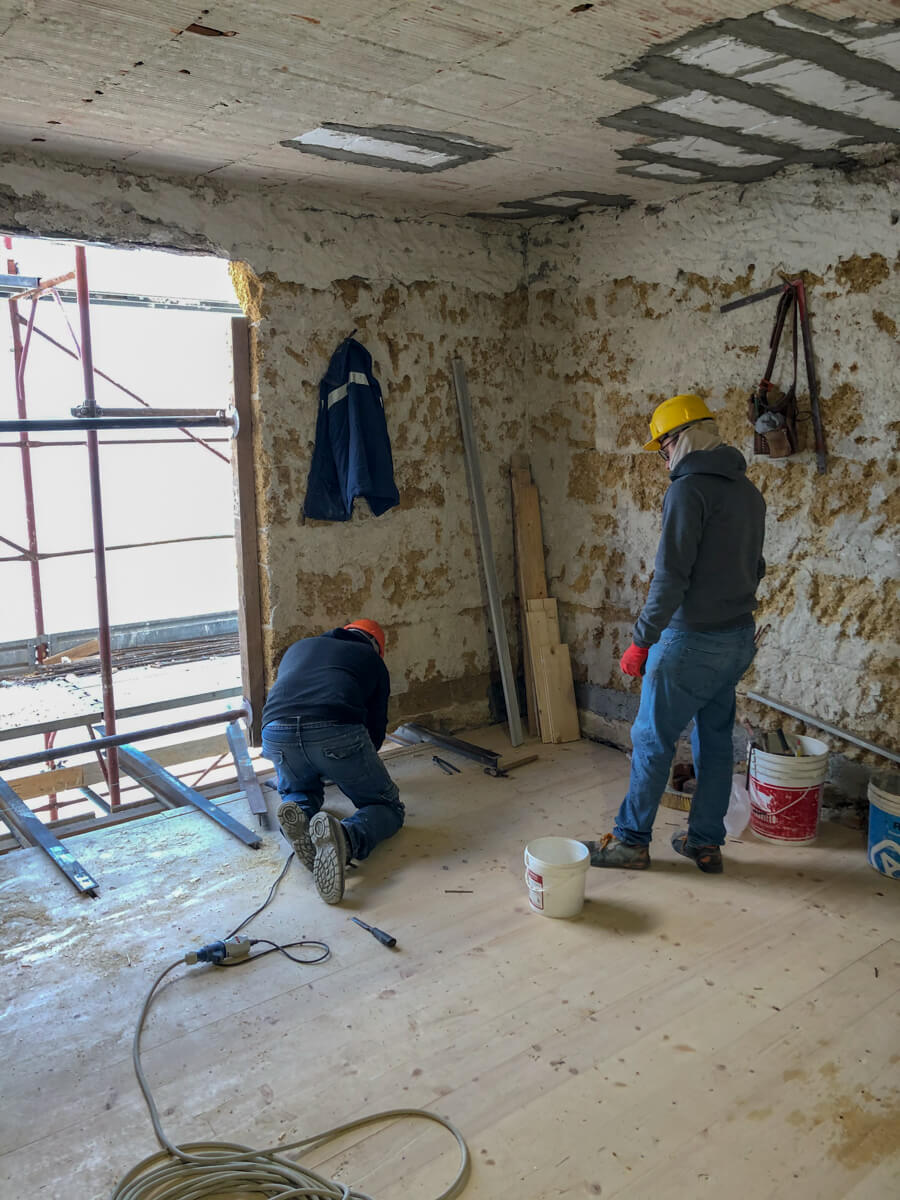
The costs, obviously, are hugely variable. No two projects are alike and we don’t know how expensive your tastes are! However, a decent rule of thumb is that simple renovations (like those in the ‘best case scenario’ above usually cost around €500 per square metre. If you’re changing the layout, adding windows and upgrading electrical or plumbing infrastructure then this can rise to nearer the €1,000 mark, but here we’re talking about the cost to turn an uninhabitable building into a top of the range home.


If you’re building from scratch, this would usually cost you around € 2,500 euros per square metre (without furnishings).

Again, this can go up and down for all the reasons you would imagine (choice of building materials, number of storeys, whether or not you have to flatten the land etc.) but our project management specialists can help you estimate everything with a high degree of accuracy before you put in a binding offer.


However, due to the complications of some of the bureaucratic agencies (see the ‘worst case scenario’ above), those costs can rise as the timescale expands. In the most complicated situation, rebuilding a destroyed rustico in a protected area, you could end up spending €3,000 per square metre. To reiterate, this is to finish with a pristine, luxurious property.


Again, the value of good project management and coordinating your local professionals is clear – they’ll be able to help you estimate the costs involved and keep your investment safe.

The architect is an absolutely crucial part of the chain. Honestly, the success of your building or renovation work stands or falls based on their work. For this reason we urge customers not to cut costs here. A good architect will usually take a fee of around 10% of the total project cost, but you will save this in the long run in reduced repair bills, insurance premiums and subsequent revision of the work. 

SHOULD I RENOVATE OR BUILD FROM SCRATCH

It’s a tricky decision. Here are some key factors to bear in mind:


Opportunity – Ruined buildings are sometimes found on land where new development is not permitted, like the coastline or areas of outstanding natural beauty. By restoring an old ruin, you could get around the restrictions and end up in your ideal location.


Flexibility – How far are you prepared to compromise on the image in your head? When you renovate a property there will always need to be compromises along the way.


Obligations and Cultural Protection – Even a building in the most dramatic state of disrepair will need to be rebuilt with an aesthetic that fits into the surrounding area. If your dream house would look like it was designed by Frank Gehry or Zaha Hadid, the chances are you’re better off finding an isolated spot and building it from scratch.


Subsidies and Bonuses – Renovating houses in Sicily can bring huge savings in the form of state subsidies (see below). If you build from scratch them you will miss out on these potentially huge savings.

Conclusions: No Longer Just a Romantic Dream

Sicily is objectively one of the cheapest places in Europe to ‘do up’ an old house. Materials are going to cost more or less the same everywhere, but labour costs offer tremendous value for money.

The steps taken by the Sicilian Government against black-market work, and the long-overdue success in the fight against organised crime mean that this saving isn’t going to come at the expense of quality.

The modern Sicilian workforce is highly competitive and, with the right assistance, able to satisfy any demand or taste. Some of our clients have brought unique design features from Scandinavia, sustainably-sourced lumber from Germany and the very latest in eco-technology from all over the world. With a well-chosen local architect to knit the project together you really can have the home of your dreams in the perfect Mediterranean location.

In many cases – especially in towns and areas without too many covenants – you’ll find that renovation costs far less than building from scratch, as the logistics of transportation mean that some materials may be a little more expensive in Sicily (iron, cement, steel etc.). And repurposing stone or timber from a building which has seen better days can give beautiful character to a home.

The timing is the biggest question: If the project drags on, the costs are only going in one direction. If you take one piece of advice from us – shop local and put your trust in people who have navigated the waters of the local bureaucracy before.

With the right team in place, and a clear vision to drive you on, there’s no limit to what you can achieve when renovating a house in Sicily!

FAQ

Can a foreign buyer renovate a house in Sicily?

Yes. Foreign buyers can legally renovate a house in Sicily with no restrictions based on nationality. International buyers may apply for renovation permits in the same way as Italian citizens, either directly or through authorised representatives. Renovation projects often require approvals from municipal planning offices and, depending on the property, additional bodies such as cultural heritage authorities or civil engineering departments.

While it is possible to manage approvals independently, most foreign buyers choose to work with local professionals. Experienced architects and project managers understand Sicily’s complex bureaucratic processes, helping to avoid delays, reduce uncertainty, and support realistic negotiations on purchase price and renovation scope.

Renovation costs in Sicily vary significantly depending on the condition of the property and the scope of work.

As a general guideline:

– Light renovations (finishes, bathrooms, kitchens): approx. €500 per m²
– Medium renovations (layout changes, windows, electrical and plumbing upgrades): up to €1,000 per m²
– Complex or structural projects (major rebuilding, protected buildings): up to €3,000 per m²

Architect fees typically range around 10% of the total project cost. Reducing this budget often increases risk, as experienced architects help prevent costly errors. Material prices are broadly in line with the rest of Europe, although Sicily offers good value for certain locally available materials such as stone and marble. Labour costs remain comparatively competitive, making Sicily one of Europe’s most affordable regions for renovation work overall.

The primary challenge is navigating Sicily’s layered administrative system. Renovation projects may require approvals from multiple authorities, including cultural heritage committees, civil engineering offices, forestry commissions, and municipal planning departments.

In complex cases — particularly protected or historic buildings — approval processes alone can take 12–18 months. Seasonal slowdowns are also common, especially in August, when many offices and contractors reduce operations. Language barriers and unfamiliar business practices can further complicate timelines and increase costs.

Working with experienced local professionals (like Property in Sicily’s project management team) who understand regional approval pathways and realistic scheduling is often the key to avoiding frustration and budget overruns.

Required permits depend on the scope of work and any restrictions (vincoli) affecting the property. Structural changes must be approved by civil engineering authorities, while properties in protected areas require consent from cultural heritage or environmental bodies. Properties near wooded areas may also involve forestry authorities.

Once all relevant approvals are obtained, documentation is submitted to the municipality for final planning authorisation. Your architect typically coordinates the entire process and manages submissions.


As there is a real drive to encourage overseas investment in some parts of Sicily, progressive municipalities, like those in Nebrodi Park for instance, will fast-track applications from international investors. 


Approval timelines vary from 1-2 months for simple apartment renovations to 12-18 months for complex projects in protected areas.

Remote management is extremely challenging and somewhat risky. If you’re not physically in Sicily during work, it’s hard to overstate how much simpler the process is made by having a representative you trust. Experienced professionals familiar with Sicilian bureaucracy complete projects months faster than those unfamiliar with regional requirements, and with fewer surprises along the way.


Critical factors include choosing an architect who is both administrator and team leader, ideally one who speaks your language fluently if you aren’t an Italian speaker. Sicily’s business culture differs significantly from northern Europe or North America, requiring cultural mediation beyond simple translation. An in-person site visit by a trusted representative offers far more reassurance than videos and images provided by the contractors you employ.


Our project management services ensure realistic scheduling, deadline respect, and clear communication – and they have been extremely popular with clients who have taken this route. Several have even returned to give us subsequent projects.