From its Greek origins nearly three thousand years ago to its present day status as the island’s second city, Catania has always been the first glimpse of Sicily for many international visitors. For centuries a bustling merchant port, and now the site of the island’s busiest airport, it has been welcoming arrivals with a unique combination of fire and water. On the east side is the Ionian sea, while to the north the dramatic silhouette of Mount Etna dominates the skyline. Many new arrivals are a little shocked to see plumes of smoke billowing from the top of what is still a demonstrably active volcano, but the city sits a reassuringly safe distance from any eruption zone. You can, however, hike, trek or even ski on its imposing slopes barely an hour away from the city centre.
Home to about 300,000 people, it is a classic southern Italian metropolis, similar in many ways to its north Sicilian cousin Palermo, and to Naples or Bari on the mainland. If you’re familiar with any of those you’ll recognise the same blend of Baroque boulevards and winding backstreets, and the layers of tangible and unmissable history. This includes the remains of the Greco-Roman theatre and the Roman amphitheatre which stand right in the heart of the modern city. You also can’t miss the thirteenth century Castle Ursino, which dominates the historic neighbourhood of Via Plebiscito. Here, in the evenings, an endless parade of restaurants open their front doors and terraces and grill delicious meats on huge barbecues out on the streetfront.
The city explodes into life every February for the feast of Sant’Agata, the patron saint of the city and the figure to whom its ornate Baroque cathedral is dedicated. Faithful devotees carry huge floats through the main streets and residential neighbourhoods alike, and vast candles are held aloft by entire teams. So much wax is generated by this display that the asphalt and cobbles of the main roads have to be covered in sawdust to facilitate the clean-up operation. An unforgettable firework display closes proceedings late into the night of February 5th.
Food lovers will find a delicious treat for every occasion. The city’s famous arancinerias sell a huge variety of flavours of the iconic deep-fried rice snack. The iconic Pasta alla Norma is found on every menu. The street market of La Pescheria is a winding, souk-like hub of freshly caught fish and social communion. If you want to dine in style Catania has some beautiful haute cuisine, including four separate Michelin-starred restaurants. Our favourite is Ménage, just behind the beautiful opera house, the Teatro Bellini. In the Liberty-style settings you can enjoy a contemporary twist on classic local dishes without breaking the bank to do so.
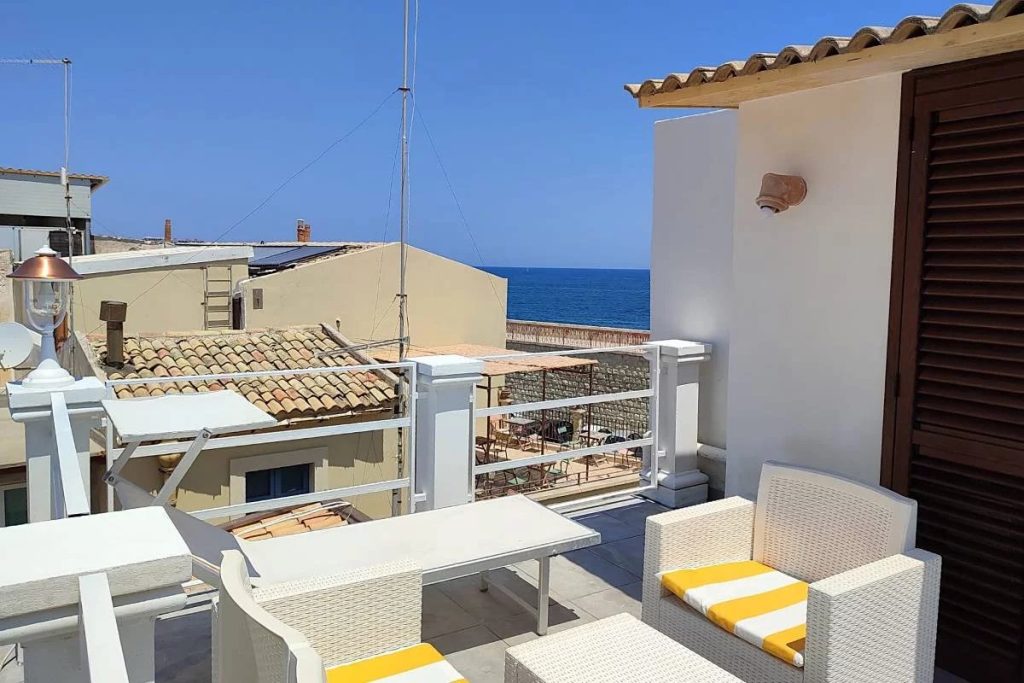
If you are looking for a desirable location for a city apartment in this bustling city and your budget is mid-range or higher, we would suggest starting around the seafront which runs north from the Europa railway station up to the rocky stretch of coast in the far north-eastern corner of Catania, known as La Scogliera. Sea views, the dark volcanic sands of the little city beach San Giovanni Licuti and the chance to moor a boat at Porto Ulisee all add to the value of real estate in this relatively quiet neighbourhood, where much of the seafront has recently been pedestrianised to great success.
At the city’s northern edge the ground begins to climb uphill, and this has made the suburb of Vulcania a popular mid-price option, and around here we begin to see small villas and terraced houses begin to appear between the apartments. This also has the advantage of being only 1.5km away from the well-respected British School of Catania.
If you are happy to live a little outside the city, the satellite community of Sant’Agata li Battiati offers lovely architecture and more green space, most notably the 135-acre park of Villa Leucatia. Out here you can find nice property for around €2,000/m2, over the Sicilian average but an absolute bargain by the standards of north Italy.
If, on the other hand, you’re determined to put yourself right in the heart of the action, the arterial Via Etnea, a dead-straight strip running from Piazza Duomo which perfectly frames the peak of the volcano on the horizon, is the main thoroughfare of Catanese life. It takes you from the centre of the old town past the gardens of the Villa Bellini, the iconic Pasticceria Savia (home of the city’s best cannoli) the fountain of Ceres and up to the Parco Gioeni. The central stretches are really desirable locations if you don’t mind a bit of noise and aren’t put off by problems finding a parking space.