
Picture from https://www.beborghi.com/cosa-vedere-palermo-3-giorni/
The expatriate communities in Sicily are already widespread and large. A quick survey reveals that significant numbers of English, Americans, Australians, Scandinavians, Germans, Swiss, Dutch, Austrians and Russians have made the island their home. These communities tend to be concentrated in the areas of Palermo and Cefalù, Catania, Taormina and Naxos, Trapani and Marsala – and clusters are beginning emerging around Siracusa. Many of us know each other and maintain relationships through the internet and the various expat organizations in Sicily. In some areas, close communities have emerged (Santa Flavia and Mongerbino, for example, are home to an active and caring network of German-speakers – trust us, we’re in it!).
Picture from https://www.beborghi.com/cosa-vedere-palermo-3-giorni/
Almost all of us are self-employed or retired and we have invested money and energy in our new homes – we have put down roots and are very happy living here (have a look this blog run by germans who have moved to Sicily, you will understand how easy it is to fall in love with this island). But let’s be honest, Sicily is not always the first destination that comes to mind for foreigners thinking of making an investment overseas. All of us, before taking this step, had the experience of being warned from many sides (by relatives and friends) about the spectre of organized crime and the Mafia.
Today, hand on heart, this has become a complete non-issue for us. But when the M-word crops up in any conversation (with those friends, relatives or foreign acquaintances), the questions are often the same: Does it really exist? If I were to vacation in Sicily could I run into problems? Is it a safety risk? If I invest there do I risk coming into contact with that world?
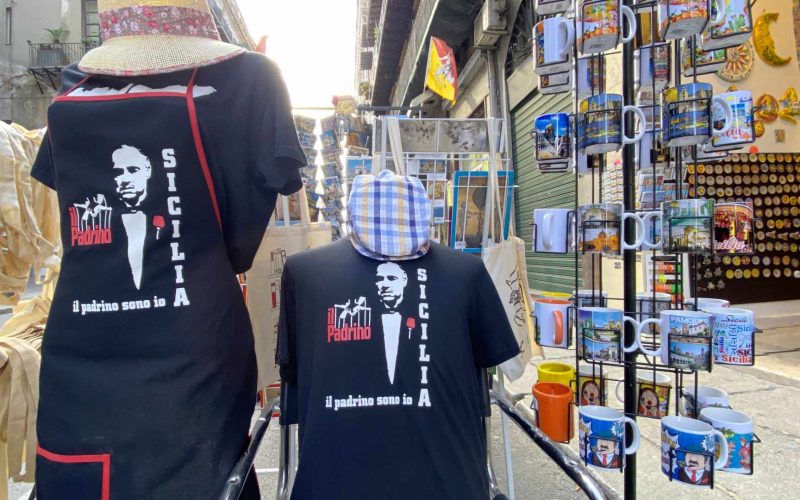
To be completely honest these questions can become a little exasperating, but we do understand that they are the inevitable product of the caricatured image of ‘the mob’ spread by films and by TV series the world over (Yes – we like The Godfather too. No, we don’t know Tony Soprano personally…). In recent decades, though it frustrates us, we have seen the growth of a rather distasteful “Mafia tourism” sub-industry: ghoulish walking tours, souvenir shops full of tat emblazoned with the face of Don Vito Corleone and brands that nod to the Cosa Nostra in a more subtle way. Despite the adage that “there is no such thing as bad publicity”, the negative effect on the island is twofold: the backwards and out-of-touch image of the Sicilians has been nourished and the fears of some less-informed foreigners to venture into our cities has been fostered.
If you have made it this far into our site, however, it means that you have already started to overcome these ideas – and we are both grateful and delighted to hear it! It demonstrates, even better, that your interest in Sicily is considered and real. So let’s briefly address some Mafia myths related to this phenomenon and hopefully dispel any lingering doubts you may have about life in Sicily.
 Unfortunately anyone who says that the Mafia has been consigned to history is not telling the whole truth. We must be realistic and honest: yes, the Mafia still exists and is still active, although it is less visible than in the past. The salient point, however, is that it is a fluid phenomenon, constantly changing with the times, technologies and new business opportunities.
The attentions of today’s Cosa Nostra are concentrated in the areas of narcotics and their trafficking, gambling, investments (both in the traditional stock exchange and in cryptocurrencies like Bitcoin) and large construction projects. Moreover, the phenomenon is no longer limited to Southern Italy, but is now spread across the whole country, and indeed the globe. In short: guns have been replaced by laptops, and cash payments at the petrol pump by credit card payments on airline tickets.
So, we’re almost disappointed to have to tell you this, but the cliché of the mafioso mustache with the coppola (typical Sicilian headgear), black vest, red neckerchief and lupara (rifle) just doesn’t fly any more. It used to be so easy to spot them! But even in the criminal underworld time and fashions pass. (NB: This is not to say you won’t run into men with mustaches and coppola caps in Sicily. It’s just that when you do you’ll not be in the presence of a mobster, but a hipster.)
Today’s gangsters do their work in top floor offices: the boss’ children study at top universities, graduate into the international business community and do their work with finance and information technology. And – sorry – they have very varied wardrobes. It turns out that a dress code was a bit of a mistake if you were trying not to get caught.
Today if the man in front of you sports wide lapels and polka dot socks, it is much more likely that you’re looking at an interior designer or a food blogger than a ‘made man’. That’s not to say that you might not want to give them a wide berth anyway, but that’s your personal choice. Don’t do it out for fear for your life.
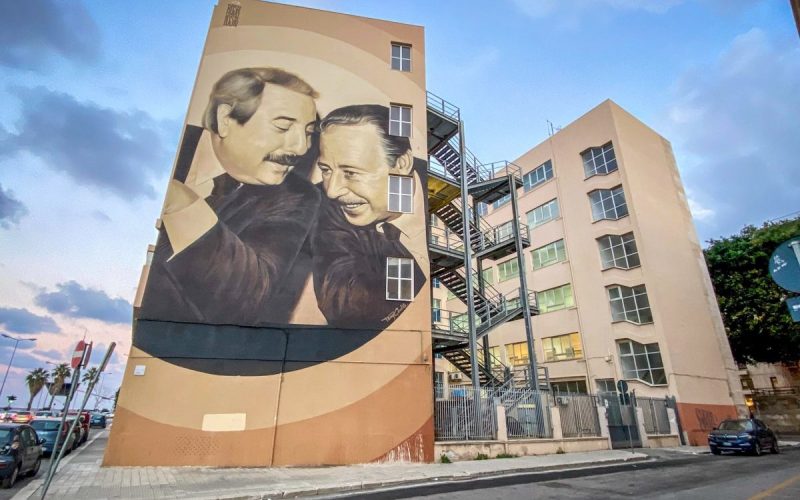
The years of street shootings and bombs are – mercifully – now just a distant memory. This is thanks above all to the work of crusading magistrates like Giovanni Falcone and Paolo Borsellino (iconic victims of Mafia assassinations in the early 1990s, after whom the airport in Palermo was renamed). In the 1980s this pair and their dedicated colleague and successors have laid clear the extent of the phenomenon by revealing its structure, explaining its mechanisms and arresting literally hundreds of Mafia members.
In addition to the now-constant fight at the institutional level, it is worth stressing (since this fact is seldom reported abroad) that Sicily has also been the land of the ANTI-Mafia movement and as locals we would be proud to discuss further the work of figures like Peppino Impastato and Giuseppe Fava, and anti-mafia business coalitions such as AddioPizzo.
If you’d like to learn more, we’d recommend a great film to anyone interested in this subject (don’t expect frenetic Hollywood action, this is in the reflective and poetic style of true Italian cinema): Tullio Giordana’s 100 Passi (The One Hundred Steps).
Incidences of reported thefts and robberies in Sicilian cities have dropped dramatically in recent years. Palermo was even discovered, in a survey conducted by the ISTAT agency, to have been the safest city in Italy over the five year period from 2012-2017.
Simply put, people who decide to buy property in Sicily can expect to enter a regulated, modern marketplace and need not be afraid of running into problems with crime. Some important factors to offer further reassurance:
Real estate agencies are monitored to ensure they operate in full compliance with the law. Our agency has been part of ADDIOPIZZO (an anti-mafia organization) for many years. But whomever you choose to work with on your real estate purchase in Sicily we would recommend that you make sure they are officially recognized and anti-mafia certified.
Property purchase deeds are always drawn up in the presence of a notary, who has the obligation to verify, through the official channels, that the property has all the legal characteristics to be sold without there being any nasty surprises in store. This acts as an excellent guarantee against scams and rip-offs.
Companies in construction industry are legally required to hold current anti-mafia compliance certificates issued by a Court.
Specialized and certified firms eliminate the risk of undeclared and uninspected building work. All workers at their service must be in compliance with the work safety procedures required by law. This is not true of unregulated sole traders, whom we always recommend you avoid – also because in this case you are not entitled to apply for tax breaks or subsidies.
Local government is subject to intense legal scrutiny, so when you have to go to the municipal offices or deal with any branch of the Public Administration, you don’t need to fear any pressure or requests of a Mafia type.
Nobody will ever ask you for protection money. The cases of extortion (the ‘pizzo’) are found in very small business and target those distant from the anti-mafia culture (in the suburbs of the big cities, unregulated street traders, illegal immigrants). We have never – we guarantee – ever heard of cases of mafia extortion of our clients or within the expatriate community.
 All that said, let’s befrank and let’s be honest: the Italian system is not always as efficient as the ones you’d find in other countries, and realistically, you’ll have done very well if you navigate a real estate purchase without a single bureaucratic tangle or hold-up. But this is the other side of the relaxed attitude that created the legendary Italian ‘dolce vita‘ .
We see it this way: the grit makes the pearl. And days in Italy are like pearls – no two are ever quite the same…
Picture from https://www.beborghi.com/cosa-vedere-palermo-3-giorni/
Yes, Sicily is safe for tourists. A survey by ISTAT, Italy’s national statistics agency, showed Palermo was the safest city in Italy during 2012-2017. Reported thefts and robberies have dropped dramatically in recent years. The street shootings and bombings of the 1980s and early 1990s are now a distant memory, thanks largely to the work of magistrates Giovanni Falcone and Paolo Borsellino.
Sicily welcomes 15 million visitors annually who experience the island safely. Standard urban precautions apply as in any tourist destination, but violent crime affecting tourists is exceptionally rare. The vast majority of Sicilians take a dim view of Mafia culture and support law enforcement. Anti-mafia movements are strong and visible throughout the island, with community organisations actively promoting legal business practices and cultural change.
Yes, property purchase in Sicily operates within a regulated, modern marketplace with robust legal protections. Real estate agencies are monitored for legal compliance, with many holding anti-mafia certification. Notaries (notai) are legally obligated to verify properties have proper legal characteristics before sale, preventing scams and irregularities. This notarial system provides excellent protection for buyers.
Construction firms must hold current anti-mafia compliance certificates issued by courts. Certified firms eliminate risks of undeclared work and ensure building safety compliance. Local governments face intense legal scrutiny, so municipal dealings proceed normally without inappropriate pressure. No expatriate property owners have reported extortion attempts. The property market functions transparently with the same legal safeguards available throughout Italy and the EU.
Yes, organised crime still exists but has transformed dramatically from its historical image. Modern Mafia activity concentrates on narcotics trafficking, gambling, financial investments including cryptocurrencies, and large-scale construction projects. Operations have moved from street-level violence to white-collar crime conducted in offices with laptops rather than guns. The phenomenon is no longer uniquely Sicilian but spread globally.
Critically, this transformation means ordinary residents, small businesses and property owners have virtually no contact with organised crime. The Mafia’s focus on high-value international operations makes traditional street-level extortion and local business interference largely obsolete. Decades of successful prosecutions led by magistrates like Falcone and Borsellino have dismantled much of the old power structure. Today’s Sicily bears little resemblance to outdated stereotypes perpetuated by films.
No, protection money (pizzo) extortion does not target property owners or the expatriate community. Not a single case has been reported amongst foreign residents or legitimate businesses working with international clients. When extortion does occur, it targets very small unregulated businesses in city suburbs, illegal street traders and operations distant from anti-mafia culture.
The Addiopizzo movement represents thousands of businesses refusing to pay protection money, demonstrating that legal enterprises operate freely. Real estate agencies, construction firms and professional services all require anti-mafia certification to operate. Property buyers deal exclusively with regulated, monitored businesses where protection rackets have no presence. Your property transactions involve notaries, registered agencies and certified contractors, all operating under legal oversight that makes extortion impossible.
Addiopizzo is Sicily’s most prominent anti-mafia business coalition, uniting thousands of enterprises refusing protection money payments. Founded by shopkeepers who took a public stand against extortion, it certifies businesses operating legally and provides consumer guidance. Many reputable real estate agencies, including established firms serving international clients, hold Addiopizzo membership as a mark of integrity.
The work of magistrates Giovanni Falcone and Paolo Borsellino in the 1980s and early 1990s revolutionised anti-mafia efforts, revealing organisational structures and securing hundreds of arrests before their assassinations. Their legacy continues through dedicated prosecutors and police units. Anti-mafia figures like Peppino Impastato and Giuseppe Fava sacrificed their lives exposing corruption. Today, institutional oversight ensures construction firms, public administration and regulated businesses operate with anti-mafia compliance certificates, creating a transparent marketplace incompatible with organised crime infiltration.